
Is Your Business Invisible to ChatGPT? Why Google Rankings Alone Won’t Save You in 2026
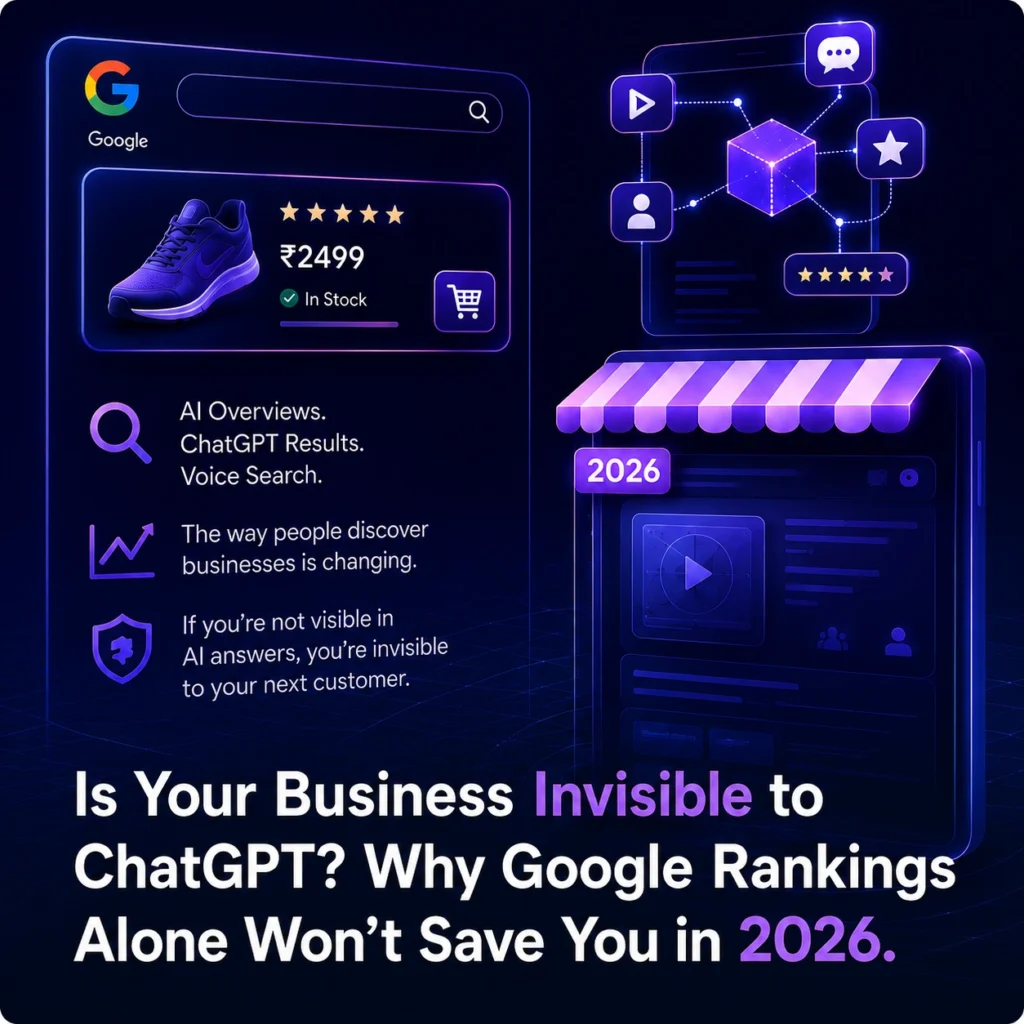
Your customers aren’t just Googling anymore — they’re asking AI. Here’s how small businesses in India can show up in the answers. Introduction Quick gut-check: when was the last time you typed a full sentence into ChatGPT or Google’s AI Overview instead of searching with three keywords? If you’re like most people in 2026, it’s becoming a habit. “Best dentist near Koramangala open on Sunday.” “Which digital marketing agency actually gets results for small D2C brands.” “Compare CRM tools for a 10-person team.” The search bar didn’t disappear — it just got a lot more conversational, and AI is now standing between your business and the customer typing the question. Ranking #1 on Google used to be the finish line. Now it’s just one of several places you need to exist — alongside AI Overviews, ChatGPT, Perplexity, and the recommendation engines inside Instagram and WhatsApp. The businesses quietly winning in 2026 aren’t necessarily the ones with the biggest ad budgets. They’re the ones that made themselves easy for both humans and AI to find, trust, and recommend. Here’s what that actually looks like — and where to start if you haven’t yet. Google Search Isn’t Dead. It Just Got a New Front Door. Local intent is still the biggest opportunity most small businesses leave on the table — nearly half of all Google searches are people looking for something near them, right now. That hasn’t changed. What’s changed is that AI Overviews often answer the question before anyone clicks through to a website, pulling from a handful of trusted sources to build its summary. If your business isn’t structured, credible, and specific enough to be one of those sources, you don’t just rank lower — you become invisible to an entire generation of searches that never reach a results page at all. Three Things Actually Moving the Needle Right Now Structured, source-worthy content — not more content. AI systems favor pages that answer one question clearly, cite real specifics (prices, timelines, locations, credentials), and read like they were written by someone who’s actually done the thing. A vague “why choose us” page won’t get cited. A detailed, honest FAQ about your process will. Local SEO, done properly. Your Google Business Profile, consistent NAP (name, address, phone) details across directories, and genuine local reviews are still doing more heavy lifting than most business owners realize. This is the highest-ROI, lowest-cost activity on this whole list — and most local businesses still haven’t finished it. Short-form video, in the language your customers actually speak. A 60-second Reel in Hindi, Tamil, or Telugu explaining your service will consistently outperform a polished English ad for a regional audience. Social platforms are also becoming full shopping channels — Instagram, YouTube, and WhatsApp now support the entire journey from “I saw this” to “I bought this,” without ever leaving the app. What This Means for You, Practically You don’t need to overhaul everything this month. Pick one: If you haven’t touched your Google Business Profile in six months, start there. If your website’s FAQ page reads like marketing copy instead of an honest answer, rewrite it. If your last five social posts were all in English but half your customers speak a regional language at home, test one video in that language this week. None of this requires a massive budget. It requires being specific, consistent, and genuinely useful — the same things that have always separated businesses that get chosen from businesses that get scrolled past. AI just made the gap more visible, faster. Ready to Stop Guessing and Start Growing? Figuring out where you actually stand — in Google, in AI search, on social — takes an outside, data-backed look most business owners don’t have time to do themselves. That’s exactly what we do for a living. [Book a free 20-minute growth audit with Growth Life →] We’ll show you exactly where your business is (and isn’t) showing up, and the two or three moves that will make the biggest difference this quarter.
How to Get Google Rich Snippets for WooCommerce Without Touching Code
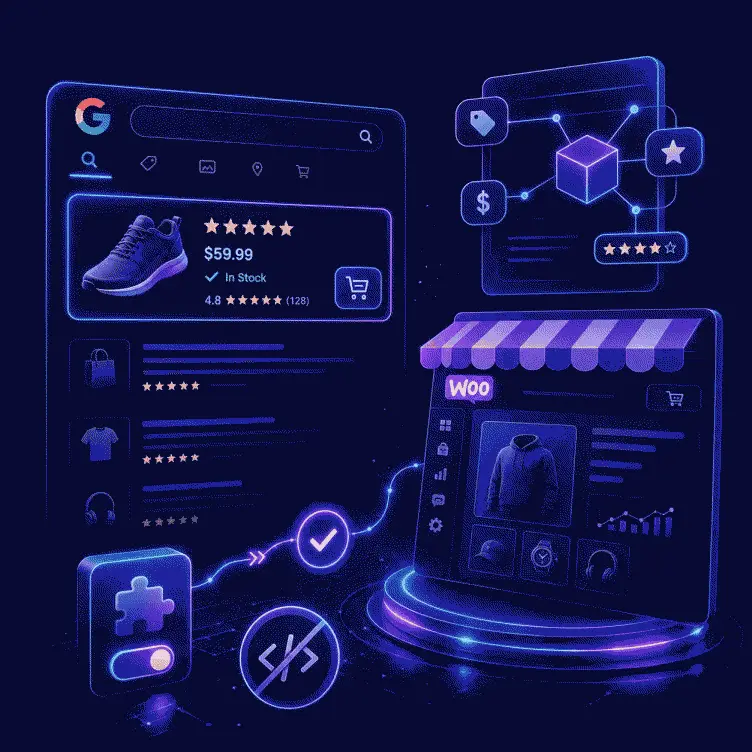
Most WooCommerce store owners do not wake up thinking about schema markup. They think about sales, traffic, abandoned carts, product visibility, and why competitors show star ratings, prices, stock status, and delivery details directly on Google while their own listing looks plain. That difference often comes down to structured data. Schema markup helps search engines understand your product pages more clearly. And when it is done properly, your pages can become eligible for richer Google results, including product details like price, availability, ratings, shipping, and return information. GrowthFlow Schema is built to make that technical work easier. What is schema markup in SEO? Schema markup is structured data added to your website code so search engines can understand your content better. For e-commerce websites, schema can tell Google what the product is, what the price is, whether it is in stock, what customers rated it, what shipping options are available, what the return policy says, and which page is a product page, blog page, or business page. Google’s official Product structured data documentation explains that product structured data can help product information appear in richer ways across Google Search, Google Images, and Google Lens. What are rich snippets? Rich snippets are enhanced search results that show extra information beyond the normal title, URL, and description. For WooCommerce products, rich snippets may show details such as product rating, review count, price, availability, shipping information, and return policy details. These details make your search result more useful before someone even clicks. The goal is simple: stand out in search results and give shoppers more confidence earlier. Does schema guarantee rich snippets? No. Schema does not guarantee rich snippets. Google decides when and how rich results appear. But structured data makes your page eligible for those enhanced results. Think of it like giving Google a clean product data sheet. Without schema, Google has to guess more. With accurate schema, it has clearer information to work with. You can test eligibility using Google’s official Rich Results Test. Why does WooCommerce need product schema? WooCommerce stores need product schema because product pages are commercial pages. Google needs to understand the product details clearly. A normal page may say: Black running shoes available now. Product schema can provide structured details like product name, brand, SKU, price, currency, stock status, reviews, shipping policy, and return policy. That structured information can help Google understand the page as a product page, not just another web page with product text. What problem does GrowthFlow Schema solve? GrowthFlow Schema solves the problem of complicated, manual schema setup. Most store owners do not want to write JSON-LD code. They do not want to manually configure product schema for every product. They do not want to spend hours fixing Search Console errors. GrowthFlow Schema turns a technical SEO task into a simpler website workflow. Automated schema generation Intelligent data fetching Product and page schema support One-click schema error detection One-click schema error fixing How does automated schema generation help? Automated schema generation creates structured data for your products and pages without manual coding. Instead of editing theme files or adding custom schema scripts, you can generate the right schema with a simpler setup. For WooCommerce store owners, this saves time because every product page may need accurate structured data. For agencies, it reduces repetitive technical work. For marketers, it makes schema easier to manage without waiting for a developer. What product details can schema show in Google? Product schema can support important product information such as price, stock availability, ratings, review count, shipping details, return policy, product images, and product descriptions. Google’s product structured data guide mentions that merchant listing markup can include detailed product information like shipping details and return policy information. That matters because shoppers often compare products directly from the search results. If your competitor shows price, rating, stock, and delivery information while your listing shows only a plain title, your result may look less useful. What is intelligent data fetching? Intelligent data fetching means GrowthFlow Schema can pull important business and product policy details from your existing links. For example, it can use your shipping policy, delivery timeline, and return information to create more accurate structured data. This is important because many store owners already have these details on their website, but they are not connected properly to schema. GrowthFlow Schema helps turn existing business information into structured data Google can understand. Why is shipping and return schema important? Shipping and return details matter because buyers want clarity before they click. A shopper may want to know how long delivery will take, whether shipping is free, whether the product can be returned, what happens if the size is wrong, and whether the store is trustworthy. Google also supports merchant-related shopping information inside Search Console. Its Shopping reports and tools documentation explains that product snippet and merchant listing reports can show how Google understands product-related structured data. When shipping and return details are clear, both Google and shoppers get a better picture of the offer. Why do schema errors happen? Schema errors happen when structured data is missing, broken, duplicated, mismatched, or written in the wrong format. Invalid JSON Missing required fields Wrong value type Theme conflicts Multiple SEO tools adding schema at once Product data missing in WooCommerce Broken templates Old schema code left behind after redesigns Google’s Unparsable structured data report lists critical structured data errors such as invalid JSON, missing commas, missing braces, and incorrect value types. For non-technical users, those messages can feel intimidating. What does Unparsable structured data mean? Unparsable structured data means Google found structured data on your website but could not read it because of a serious syntax problem. In simple words, the code is there, but it is broken. This can stop Google from understanding the schema type properly. It can also hide other warnings until the main parsing issue is fixed. GrowthFlow Schema’s one-click error resolution is useful here because it helps detect and fix validation issues without forcing you
How to Improve Image SEO and WooCommerce Speed With Smarter WordPress Media Optimization
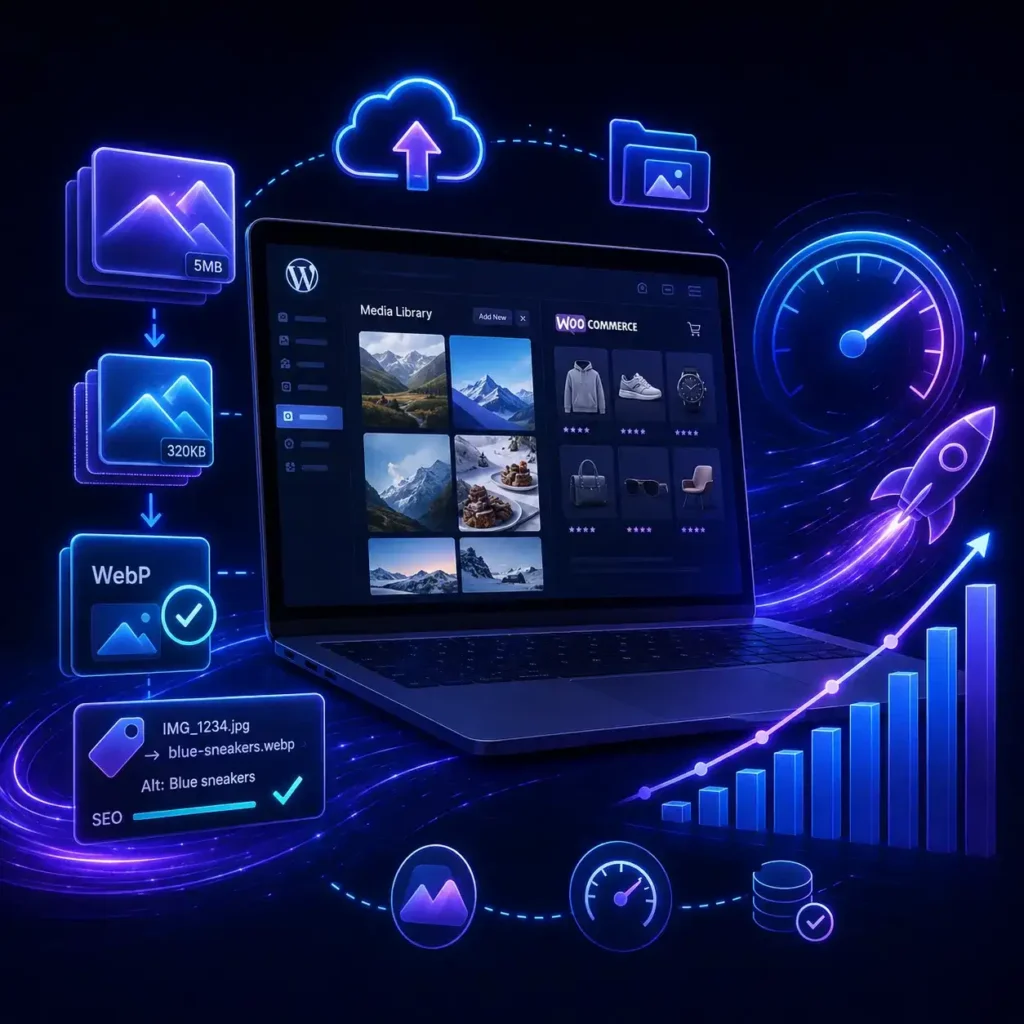
Images can quietly slow down a WordPress website. A product page may look fine, but behind the scenes, heavy images, random file names, lazy-loaded banners, and unused media files can hurt page speed, SEO, and user experience. For WooCommerce stores, this problem becomes bigger. Every product needs photos. Every gallery adds weight. Every banner affects load time. And if the first visible image loads late, your Largest Contentful Paint, also called LCP, can suffer. That is why many website owners now search for questions like: how to improve image SEO, how to speed up WooCommerce, WebP converter for WordPress, fix LCP image lazy loaded, and unused image cleaner WordPress. What is image SEO in WordPress? Image SEO is the process of making your website images easier for search engines and users to understand. Clear image file names Helpful alt text Compressed image sizes Modern formats like WebP Correct image placement Fast loading behavior Clean media library structure Google’s image SEO best practices recommend using standard image elements, descriptive context, and accessible image information so images can be discovered properly. For WordPress websites, image SEO is not only about ranking in Google Images. It also supports page SEO, product SEO, user experience, and Core Web Vitals. Why do image file names matter for SEO? Image file names help search engines understand what an image is about. A weak file name looks like IMG_4582.jpg. A stronger file name looks like black-running-shoes-men.webp. The second name gives more context. It tells Google, your media library, and your team what the image represents. For WooCommerce stores, this is especially useful because product images often support commercial search queries. A product photo with a descriptive name can support the page’s relevance. Automated image renaming helps because most teams do not have time to rename every image manually before upload. How does automated image renaming help WordPress SEO? Automated image renaming reduces manual work and improves media consistency. Instead of uploading files with random names from phones, cameras, or design exports, image names can be cleaned and made more relevant during the upload process. Product image SEO Blog image SEO Category banner organization Media library search Long-term website maintenance For agencies and WooCommerce teams, this saves hours of repetitive work. Why are WooCommerce product pages often slow? WooCommerce product pages are image-heavy. A single product may include a main product image, gallery images, variation images, related product thumbnails, review images, and promotional banners. According to WooCommerce product image documentation, product images and galleries are a core part of how customers view and evaluate products. The problem is that every image adds weight. If those images are large, poorly formatted, or loaded at the wrong time, the page becomes slower. Slow product pages can reduce conversions because shoppers expect product visuals to appear quickly. What is WebP conversion and why is it important? WebP is a modern image format that helps reduce image file size while keeping good visual quality. WordPress has supported WebP uploads since version 5.8, as shared by Make WordPress Core. For WooCommerce stores, WebP conversion can help product pages load faster because product images usually make up a large part of total page weight. The benefit is simple: smaller image files can help pages load faster, especially on mobile connections. How does bulk WooCommerce gallery uploading save time? Bulk WooCommerce gallery uploading helps store owners and agencies add multiple product images faster. Without bulk uploading, the process is slow: upload one image, assign it, upload another image, convert it, and repeat again. For stores with hundreds of products, this becomes a major time drain. A bulk gallery workflow helps teams upload product visuals faster, keep galleries organized, and reduce manual effort. When WebP conversion is included, the workflow becomes even stronger because images are optimized during the process. What is LCP in website performance? LCP stands for Largest Contentful Paint. It measures how quickly the largest visible content element loads on a page. This element is often a hero banner, featured image, product image, or large text block. Google’s web.dev LCP guide says websites should aim for an LCP of 2.5 seconds or less for a good user experience. For WordPress sites, the LCP element is often an image. That is why image loading behavior matters so much. What is eager loading? Eager loading tells the browser to load an important image immediately. This is useful for images that appear at the top of the page, such as homepage hero banners, landing page banners, main WooCommerce product images, offer banners, and above-the-fold category images. By default, many speed tools focus on lazy loading. Lazy loading is useful for images lower down the page. But it can be harmful when applied to the most important first-screen image. Should hero banners be lazy loaded? Usually, no. Hero banners and above-the-fold images should not be lazy loaded if they are likely to become the LCP element. Google’s lazy-loaded content guidance says content that is likely visible when a user opens the page should not be lazy-loaded. The web.dev lazy loading guide also recommends eager loading images visible in the first viewport, especially likely LCP images. This is why an Eager Load setting is important. It helps critical banner images load sooner instead of waiting like below-the-fold images. How can eager loading improve LCP? Eager loading can improve LCP by helping the browser discover and load the most important image earlier. If your main banner or product image is lazy loaded, the browser may delay loading it. That delay can hurt LCP. With eager loading, the browser treats the image as important from the start. Improve perceived speed Reduce LCP delays Improve PageSpeed Insights opportunities Make first-screen content appear faster Improve mobile user experience You can test this using Google PageSpeed Insights. What is an unused image cleaner? An unused image cleaner scans your WordPress media library and helps identify images that are no longer being used on the website. Over time, WordPress sites collect old banners,
Upskilling in 2026 – Why Continuous Learning Is No Longer Optional

The pace of change in technology and business has made one thing clear: learning never stops. Skills that were in demand a few years ago are becoming outdated, while new roles are emerging rapidly. Upskilling is no longer a choice—it’s a necessity. What Is Upskilling? Upskilling means learning new skills or enhancing existing ones to stay relevant in your career. It allows professionals to: Adapt to changing roles Stay competitive in the job market Unlock new career opportunities Who Should Upskill? Upskilling benefits: Students preparing for careers Graduates entering the workforce Working professionals seeking growth Career switchers exploring new fields No matter your stage, learning new skills strengthens your career foundation. How GrowthLife Supports Upskilling GrowthLife provides flexible and industry-relevant learning experiences through: Short-term, focused courses Updated curriculum aligned with industry trends Hands-on projects and assessments Career mentorship and guidance Our goal is to make upskilling accessible, practical, and impactful. Final Thoughts The future belongs to those who keep learning. Upskilling ensures you stay relevant, confident, and prepared for opportunities ahead. With GrowthLife, continuous learning becomes a powerful career strategy—not a challenge.
How Practical Learning Gives You a Competitive Edge in Today’s Job Market
The job market has become more competitive than ever. With thousands of applicants applying for the same role, having a degree alone is no longer enough. Employers are now searching for candidates who can apply knowledge in real-world situations. This is where practical learning makes a real difference. Why Employers Prefer Practical Skills Modern businesses need professionals who can contribute from day one. Practical learners: Require less training Adapt quickly to tools and workflows Solve problems independently Deliver measurable results This makes them valuable assets to any organization. GrowthLife’s Practical Learning Approach At GrowthLife, we emphasize learning by doing. Our programs are designed to help learners gain confidence and clarity through: Live industry projects Tool-based training Case studies from real businesses Expert mentorship This approach ensures learners don’t just learn concepts—they master them. The Career Impact Practical learning leads to: Higher interview success rates Stronger portfolios Increased confidence Faster career growth Employers notice candidates who can demonstrate real skills rather than just theoretical knowledge. Conclusion n a competitive job market, practical learning is your strongest advantage. By focusing on real-world skills, you don’t just qualify for jobs—you stand out. GrowthLife is committed to helping learners gain practical expertise that turns potential into performance.
Why Skill-Based Learning Is the Future of Career Growth in 2026

In today’s fast-evolving digital world, degrees alone are no longer enough to guarantee career success. Employers are increasingly looking for practical skills, real-world experience, and adaptability. This shift has made skill-based learning the foundation of career growth—and platforms like GrowthLife are at the forefront of this transformation. The Changing Job Market Technology is reshaping industries faster than ever. Roles in data analytics, digital marketing, web development, and automation are constantly evolving. As a result, companies now prioritize what you can do over what you studied. Skill-based learning bridges this gap by focusing on: Hands-on training Industry-relevant tools Real project experience Continuous upskilling Why Traditional Education Alone Isn’t Enough While formal education builds foundational knowledge, it often lacks: Practical exposure Updated industry tools Job-ready training Graduates frequently struggle to meet real workplace demands. Skill-based learning complements traditional education by turning knowledge into actionable expertise. How GrowthLife Empowers Learners At GrowthLife, learning goes beyond theory. Our programs are designed to make learners job-ready and future-proof. We focus on: Industry-aligned curriculum created by experts Live projects & case studies to build confidence Mentorship & career guidance Flexible learning paths for students and working professionals Our goal is simple: help you grow skills that actually matter. Benefits of Skill-Based Learning Skill-based education offers clear advantages: Faster career entry Higher employability Better adaptability to industry changes Increased earning potential When you learn skills that companies need, opportunities naturally follow. The Future Belongs to Lifelong Learners Careers are no longer linear. Continuous learning is the key to staying relevant. Whether you’re a student, a graduate, or a working professional, upgrading your skills is no longer optional—it’s essential. GrowthLife supports lifelong learning by providing: Updated course content Emerging technology training Career-focused learning experiences Final Thoughts The future of work belongs to those who are willing to learn, unlearn, and relearn. Skill-based learning is not a trend—it’s the new standard. At GrowthLife, we’re committed to helping you grow, adapt, and succeed in a competitive world. Start building skills today that shape your tomorrow.